


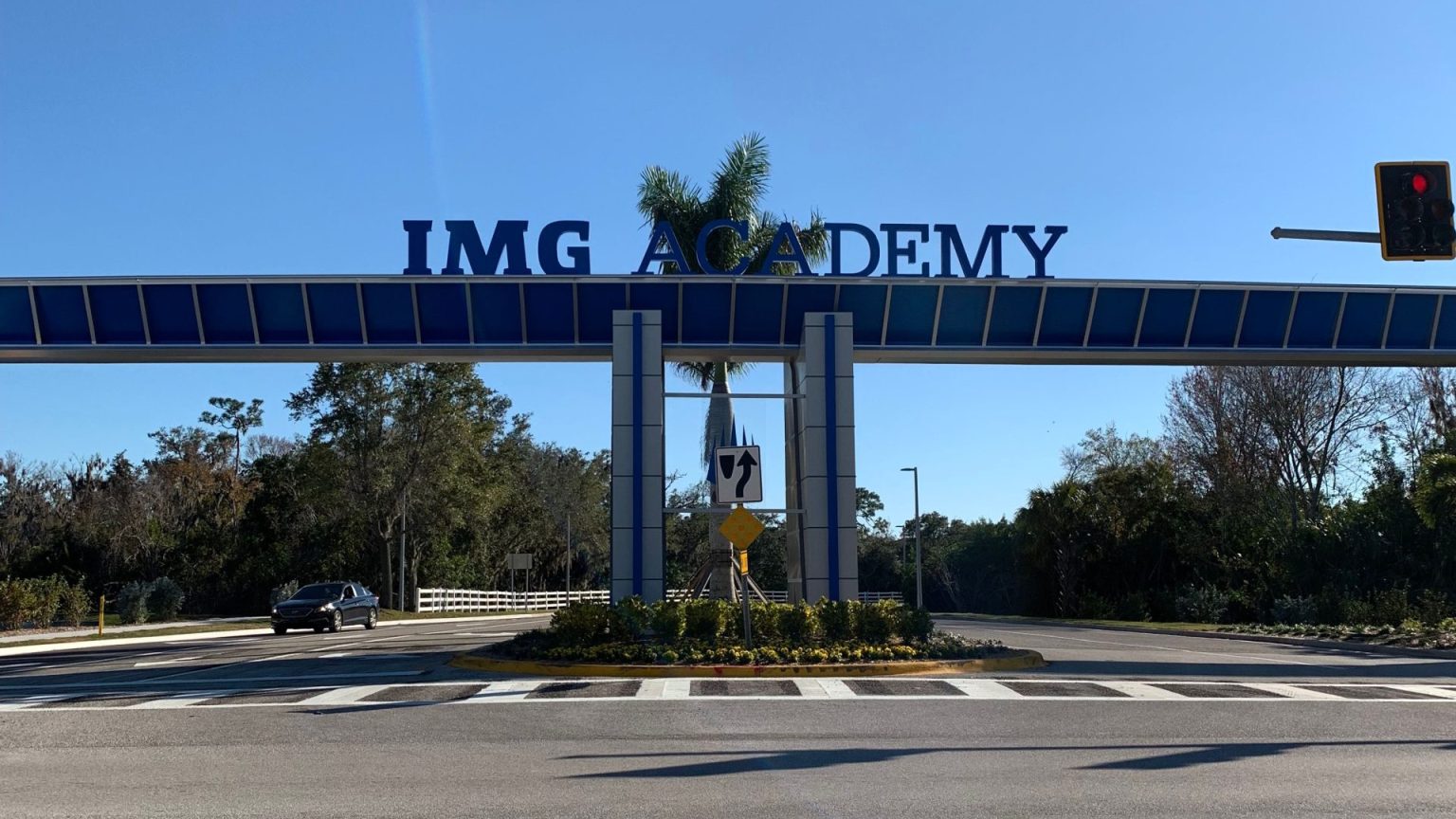
BRADENTON, Fla. — IMG Academy has agreed to pay $1.72 million after federal authorities said the school processed tuition payments from two individuals sanctioned in connection with a Mexican drug trafficking organization.
The settlement, announced Feb. 12 by the U.S. Department of the Treasury’s Office of Foreign Assets Control, stems from conduct between 2018 and 2022 involving student-athletes whose parents were listed as Specially Designated Nationals, or SDNs, under the Foreign Narcotics Kingpin Designation Act.
The Kingpin Act authorizes the federal government to impose blocking sanctions on foreign individuals determined to have provided financial support or services to significant narcotics traffickers. Once designated, SDNs are added to OFAC’s sanctions list, and U.S. persons and entities are generally prohibited from directly or indirectly engaging in transactions involving their property or interests in property.
According to OFAC’s enforcement release, IMG entered into multiple tuition enrollment agreements with the two SDNs for the enrollment of their children in the school’s boarding programs. Over five academic years, the school renewed the agreements and processed tuition and related payments ranging from approximately $47,000 for a half semester to more than $100,000 for a full academic year.
OFAC determined that IMG engaged in 89 apparent violations of the Foreign Narcotics Kingpin Sanctions Regulations, including entering into agreements and conducting 83 related financial transactions tied to the sanctioned individuals. Payments were primarily made through third-party wire transfers and credit card transactions, including transfers from entities located in Mexico into IMG’s bank account at a U.S. financial institution.
In its release, OFAC described IMG’s conduct as “reckless,” citing the school’s failure to conduct sanctions screening checks. The agency said the individuals provided full name details matching entries on the SDN list during the enrollment process and that minimal due diligence could have revealed their status.
Despite that finding, OFAC classified the case as “non-egregious” and said there was no evidence IMG had actual knowledge that the individuals were sanctioned. The settlement also reflects that the violations were not voluntarily self-disclosed, though the agency credited IMG for substantial cooperation and remedial measures taken after the issue came to light.
IMG Academy said it did not have an OFAC sanctions compliance program in place during the period in question and that, upon learning of the issue, it cooperated with investigators and “implemented a comprehensive sanctions compliance program.”
Professor Goplerud, a law professor at Florida A&M University with experience in sports and higher education law, said the case underscores the importance of having compliance systems in place before problems arise.
“What IMG didn’t have in place was a really good overall compliance program,” he said.
He added that the severity of regulatory violations often depends on intent. “Intentional non-compliance is going to be way more problematic than negligence,” he said.
Goplerud said the enforcement action may serve as a broader warning for academic institutions.
“Schools like FAMU, UF, FSU, whoever, now need to be aware that this law has been enforced in an academic setting,” he said.
He acknowledged that schools may face tension between compliance efforts and maintaining relationships with prospective families.
“But I would also think that schools are going to be reluctant to do that because they might offend other people that they’re talking with,” he said. “And, you know, so they don’t want to, you know, be overly nosy or offensive to prospective students’ parents. So there’s that kind of give and take.”
Still, he said the case should prompt institutions to review their safeguards. “If they’re not, it’s a bit of a wake up call,” he said.
OFAC emphasized that academic institutions are not immune from sanctions risk and recommended screening students, counterparties and payors against the SDN list, along with implementing risk-based compliance programs and staff training.
Headquartered in Bradenton, IMG Academy offers academic and elite athletic training programs to students from around the world. The case signals that institutions operating internationally are expected to maintain effective controls to prevent prohibited dealings under U.S. sanctions law.


